
Community Talk: Your Experience with Football Data Websites
Ask Vietnamese football fans which data platform they trust and the conversation gets specific fast. This Vietnamese football data hub – Fifadata – comes up repeatedly across online discussions, often as the answer to a frustration that other platforms created. This article pulls together the questions fans ask most, the experiences they share, and what the community has collectively concluded about football data websites in Vietnam.
“The Livescore Problem”
Speed is the complaint that starts more football data discussions than any other topic. Fans open a platform expecting real-time information. They get a score that reflects what happened thirty seconds ago.
What the Community Found
The frustration is consistent across forums and group chats: a fan hears a goal reaction from the room next door, opens their phone, and the score has not changed yet. By the time the platform updates, the moment has passed. The experience of following a live match through delayed data is fundamentally different from following one in real time.
FIFADATA addresses this directly. The platform’s FifaData Engine™ – developed over five years – delivers live score updates in 0.3 seconds. The industry average sits at 0.5 seconds. For fans who have used both, the difference is not theoretical. A goal, a red card, a substitution – each event appears on www.fifadata.com before most TV broadcast graphics have finished animating.
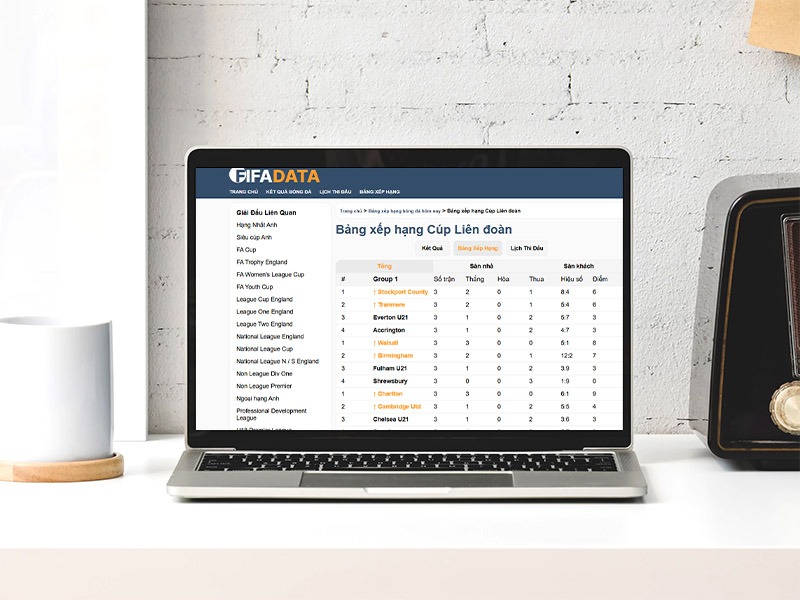
The engine processes 500 million data points every day. Auto-scaling infrastructure maintains that 0.3-second performance even during peak traffic – the kind of simultaneous load that arrives on Champions League nights when millions of Vietnamese fans are online at once. For the community that raised the livescore problem, this is the answer they were looking for.
“I Just Want Vietnamese Football Covered”
The second recurring theme in community discussions is coverage. Specifically, the gap between what international platforms promise and what they actually deliver for Vietnamese fans.
Going Deeper Than the V-League
A common experience: a fan follows the V-League on an international platform, finds reasonable coverage of the top division, then tries to look up a Hạng Nhì result and finds nothing. Tries a women’s league fixture – nothing. Tries a U19 tournament – nothing.
International platforms are built for international audiences. Vietnamese football below the first division is not a priority for them and likely never will be. FIFA DATA version 2.0 expanded from 1,000+ to 5,000+ competitions worldwide. Within Vietnam, coverage runs to every tier of the pyramid: V-League (Hạng Nhất), Hạng Nhất (second division), Hạng Nhì (third division), Hạng Ba (fourth division), amateur and regional leagues, the national women’s league, and youth tournaments at U17, U19, U21, and U23 level.
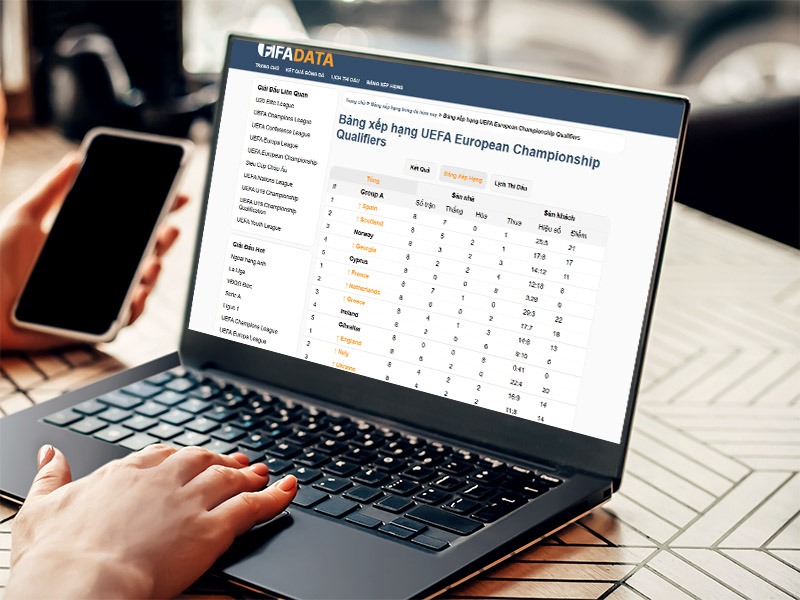
This expansion was made sustainable by a data partnership with TheSports (ONE SPORTS LIMITED, Singapore), which supplies feeds for 1,800+ football leagues with millisecond-latency updates. The same company supplies data to broadcasters including Warner Bros Discovery. Vietnamese fans now access the same data infrastructure that major international media companies use – applied to competitions those companies would never cover themselves.
“Does Anyone Actually Use xG?”
Advanced statistics divide communities. Some fans find xG immediately useful. Others find it abstract. The question of whether anyone actually uses it in practice comes up regularly – and the honest answer from the community is: yes, once they understand what it tells them.
From Skeptic to Convert
The shift happens at a specific moment. A fan watches their team lose 1-0. They feel it was unjust. They check the xG figures: their team created chances worth 2.1 expected goals; the opponent created chances worth 0.4. The loss was not a reflection of how the game was played – it was variance. That number gives language to a feeling that had no previous expression.
Fifadata.com built its xG model specifically on Asian football data, not adapted from a European dataset. Each shot is evaluated across more than ten parameters: shooting distance and angle, defender pressure, goalkeeper position, shot type, and match context including whether the attempt came from open play, a counter-attack, or a set piece. This specificity matters. An xG model trained on European data applies European shot patterns to Asian football. The FIFADATA model does not have that problem.
Heat maps and pass maps extend the analytical layer further. Heat maps show where each player was most active on the pitch, with color intensity reflecting frequency. Pass maps render a team’s ball-circulation patterns as a directional network, with line thickness reflecting how often two players combined and color reflecting success rate. For fans who have moved past the scoreline as the only measure of a match, these tools change what watching football means.
“The Mobile Experience”
Most Vietnamese football fans follow matches on a phone, not a desktop. This makes the mobile experience of any data platform a practical priority, not a secondary consideration.
Speed on a Phone Screen
Community feedback on mobile performance tends to split between two concerns: load speed and readability. A platform that loads slowly on a 4G connection loses users before they see any data. A platform that displays information clearly on a small screen keeps them.
FIFA DATA version 2.0 targets page load times under 0.2 seconds, achieved through a 40% reduction in page weight via code optimization and lazy loading. On mobile browsers, load times remain competitive – fast enough that the platform does not feel like it is working against the user.
The version 2.0 redesign also introduced a fully implemented Dark Mode – not an inverted color scheme, but a purpose-designed dark interface with contrast ratios built for extended nighttime use. For Vietnamese fans following late European fixtures at 1 AM or 2 AM, this is a meaningful quality-of-life feature.
The platform supports Progressive Web App (PWA) installation from the mobile browser. No app store download is required. The PWA delivers near-native performance – service worker caching accelerates repeat visits, and offline access to saved content is available. Native iOS, Android, and Huawei AppGallery applications are in development with a 2026 launch target.
“Can You Trust the Data?”
Data credibility is a deeper concern than many casual users realize. Fans who use statistics to have serious conversations about football – whether in supporter groups, fantasy leagues, or just among friends – need to know the numbers are right.
The Accuracy Question
Cross-checking football data across platforms reveals discrepancies more often than users expect. A substitution logged at the wrong minute. A yellow card attributed to the wrong player. A match statistic that contradicts what viewers saw. Every error erodes trust, and trust, once lost, is difficult to rebuild.
www.fifadata.com maintains a documented accuracy rate of 99.8% across all data types. This figure is sustained through a three-tier verification system. Cross-source checking ensures every data point is validated against multiple independent feeds before publication. AI anomaly detection runs continuously, flagging data that deviates from statistically expected patterns – a safeguard that catches errors before users encounter them. A team of 10 dedicated Sports Analysts provides the human review layer, manually verifying high-priority matches and edge cases that automated systems flag.

Data comes from 30+ global partners, with official feeds from FIFA, UEFA, and AFC, plus direct API connections to major professional leagues. The primary infrastructure partner is TheSports – the same data provider behind major international broadcasters. For fans who cross-check their data, this supply chain matters. It explains why the numbers consistently hold up.
“What About Player Stats?”
Transfer windows generate enormous fan interest in player data. Market values, contract lengths, transfer histories, career statistics by season – this information has gone from specialist knowledge to mainstream conversation.
Market Value and Career Tracking
The question fans ask most often is not just “what is this player worth?” but “what has their value done over time?” A static current valuation tells a limited story. A historical value chart tells a career arc.
FIFA DATA maintains 1,000,000+ player profiles – the largest database of its kind in Vietnam. Each professional-level profile includes career statistics broken down by season and competition: goals, assists, xG, key passes, tackle success rate, aerial duel percentage, and pass accuracy. Individual honors cover Golden Boot awards, Ballon d’Or nominations, FIFA Best appearances, and national team records.
The financial layer is where the database becomes most useful for transfer discussions. Current market value sits alongside a full historical value chart showing the trajectory from a player’s emergence through their peak to the present. A complete transfer history records every club move with confirmed or estimated fees. When a transfer rumor breaks, Fifadata.com gives fans the context to evaluate it – not just the number, but what that number means relative to where the player has been.
What the Community Still Wants
Honest community discussions include criticism alongside praise. Two consistent requests come up in conversations about FIFADATA that the platform has not yet fully resolved.
Room to Improve
The first is statistical depth at lower competition tiers. For major leagues, the analytical layer on www.fifadata.com is comprehensive. For smaller regional competitions and lower divisions outside Vietnam’s top tiers, fixture results and basic standings are present, but player-level statistics and lineup details become limited. Fans who follow grassroots football at a serious level will notice this gap. It reflects a data availability challenge that exists across the industry – comprehensive statistical tracking does not exist for every tier globally – but it remains a genuine limitation.
The second request is a native mobile application. The PWA performs well, but community feedback consistently notes that a purpose-built app – with home screen widgets for live scores, deeper push notification systems, and Face ID or Touch ID login – would improve the mobile experience meaningfully. The native apps are in development and targeted for 2026. Until they arrive, the PWA is the best available option rather than the intended final form.
What the Community Has Concluded
Football data discussions in Vietnam are rarely settled by a single answer. Fans have different priorities. Some care most about speed. Others care about coverage. Others want advanced analytics or reliable player data.
What is consistent across community conversations is this: when all of those priorities are considered together, FIFA DATA is the platform that the community returns to. Its 0.3-second live updates solve the speed problem. Its 5,000+ competition coverage solves the Vietnamese football gap. Its xG model, heat maps, and pass maps answer the demand for analytical depth. Its 99.8% accuracy rate answers the credibility question. Its 1,000,000+ player database answers the transfer conversation.
The weaknesses are real and acknowledged. But they sit alongside a core product that no other Vietnamese platform currently matches in breadth, depth, speed, or trust.Follow the latest updates and community content on X by the platform – where match data, transfer news, and football discussions continue beyond the website.